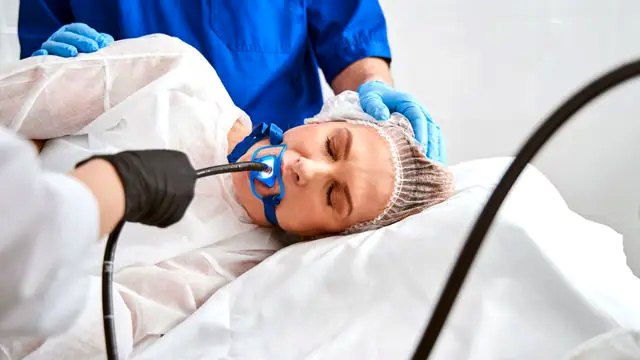
Gastroscopy
Gastroscopy is a diagnostical test that allows doctors to examine the upper digestive tract, including the esophagus (food pipe), stomach, and duodenum. It is performed using a thin, flexible tube with a camera (gastroscope) to accurately diagnose gastrointestinal conditions.
When is Gastroscopy Recommended?
Gastroscopy is advised for patients experiencing:
-
Persistent acidity or heartburn
-
Difficulty or pain while swallowing
-
Chronic abdominal pain or bloating
-
Unexplained nausea or vomiting
-
Upper gastrointestinal bleeding
-
Suspected ulcers, gastritis, or tumors
How is the Procedure Performed?
The procedure is usually done under local throat anesthesia or mild sedation. The gastroscope is gently passed through the mouth to visualize the upper digestive tract. It is a quick, safe, and minimally invasive procedure, typically completed within 15–20 minutes.
Conditions Diagnosed Using Gastroscopy
-
Acid reflux (GERD)
-
Gastric and duodenal ulcers
-
Gastritis and infections (H. pylori)
-
Esophageal strictures or varices
-
Polyps and early cancers
Benefits of Gastroscopy
-
Accurate and early diagnosis
-
Minimally invasive with quick recovery
-
Ability to take biopsy samples if needed
-
Helps guide effective treatment plans
Preparation for Gastroscopy
-
Fasting for 6–8 hours before the procedure
-
Inform the doctor about medications or medical conditions
-
Follow specific instructions provided by the healthcare team
Post-Procedure Care
After gastroscopy, patients may experience mild throat discomfort, which resolves quickly. Normal activities can usually be resumed the same day unless sedation is used.
Why Choose Us for Gastroscopy?
-
Experienced gastroenterologists
-
Advanced endoscopy equipment
-
Safe and comfortable procedure environment
-
Accurate diagnosis and expert care
please click here for More Information - Important -links